Lore of the Hwítmerscingas
The King Beneath the Hill
Ing, Elfhame, and the Keeping of the Land
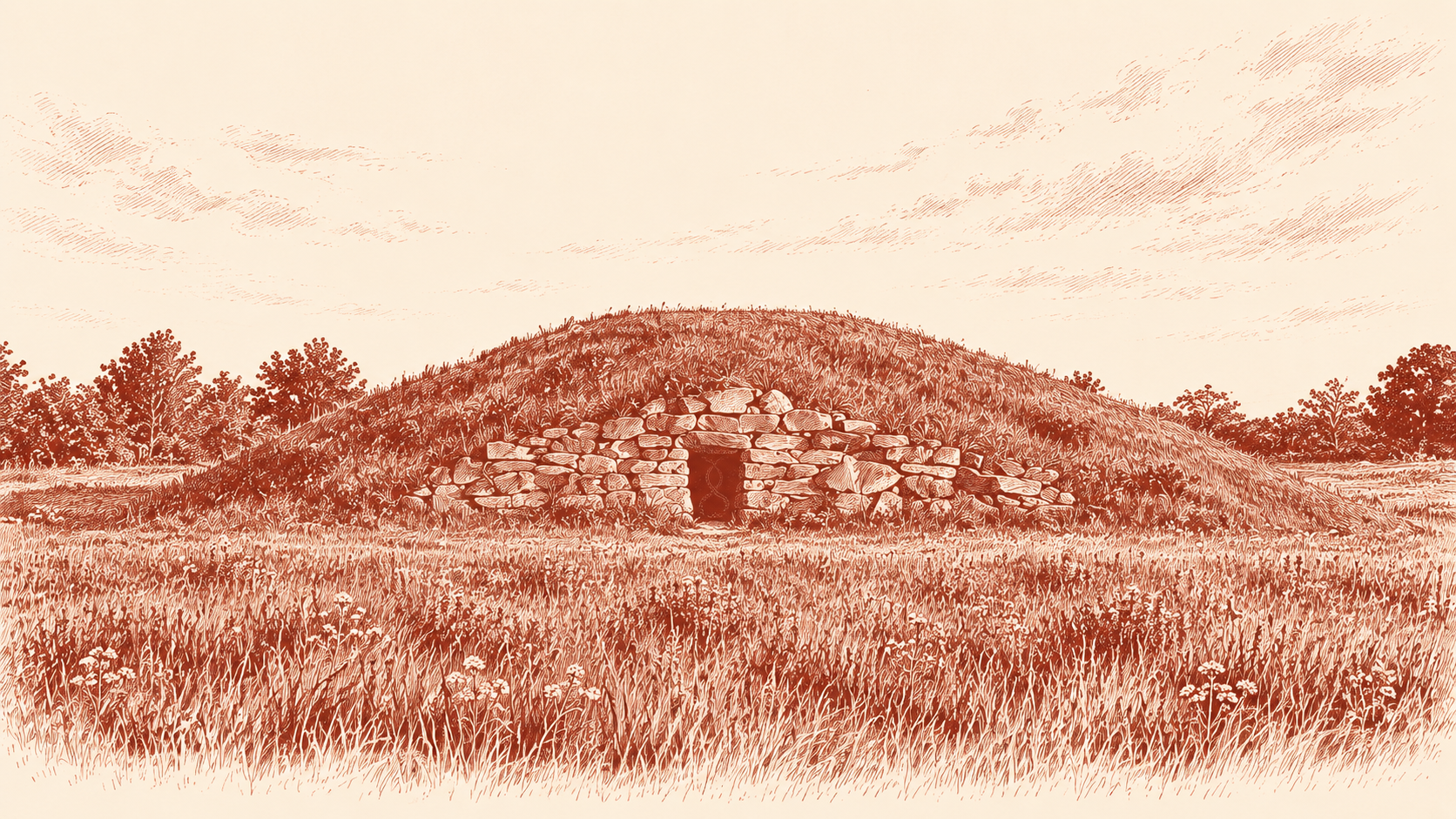
The king who brings prosperity must remain in the land. In the traditions surrounding Yngvi-Freyr and Fróði, death does not immediately dissolve the bond between ruler and people; the community continues to depend upon the presence through which its good seasons and peace have been understood. The mound gives that presence a dwelling. Our proposal is that Ing may be approached through this figure of the abiding king, whose withdrawal from ordinary sight changes the manner of his presence without ending his relationship with the country.
In What the Names Keep, the account of Ing’s departure is brought into relation with the kings who continue to receive tribute after death. Wægn ran æfter develops the place of procession within that continuing relationship. Here we turn to the place where the king remains, bringing the royal mound into conversation with Freyr’s possession of Álfheimr and with English and Scots accounts of the country beneath the hills. This is a theological synthesis of distinct traditions; the connections we draw belong to our interpretation, while the individual stories retain their own names and settings.1
The king who remains in the land
In Ynglinga saga, Freyr is also Yngvi, and Fróði’s peace begins during his reign. When he dies, his attendants secretly place him in a mound and conceal his death for three years. Tribute continues to reach him. Eventually the Swedes learn the truth, but good seasons and peace have endured; they believe these blessings will continue while Freyr remains in Sweden. They therefore preserve his body from burning and continue sacrificing to him.2
The decisive moment comes when the concealment is no longer effective. Knowledge of the death could have ended the arrangement, yet the people recognise an enduring benefit and respond by maintaining their relationship with its source. Their decision gives the burial a religious meaning that outlasts the original deception. The king’s visible life has ended, but the land continues to prosper under the conditions associated with his rule.
For our theology, the importance lies in that attachment to a particular country. Ing’s presence has a place among the people who acknowledge him. The mound can stand within the country’s ordinary geography while holding a relationship that exceeds ordinary human life. Its earth belongs to the same land that bears the crops and supports the households; the king who abides there remains implicated in their welfare. Burial establishes a lasting point of approach through which the community can continue to address him.
The language of the ever-king follows from this understanding. It names the continuance of kingship across the death or withdrawal of its visible bearer. His enduring authority is known through the relationship that remains possible, and through the good sought within that relationship. The people still have someone to whom they can bring their gifts and direct their appeals.
Gold silver and copper
Freyr’s mound is built with a doorway and three openings, described as windows in the translation. Gold enters through one, silver through another, and copper coin through the third. The payments are called tribute; sacrifice continues after his death becomes known.3
These details give the mound an unusually clear role in the life of the kingdom. Wealth still reaches the king through an ordered act of delivery. The openings permit a transaction between the inhabited country and the concealed royal dwelling, allowing the relation expressed by tribute to continue when its recipient can no longer appear before his people. A boundary remains, but the boundary admits gifts.
The different metals make that exchange concrete. Distinct forms of wealth have their appointed means of reaching the same recipient. The country continues to yield something to its king, and the king continues to be understood as a source of the country’s well-being. In our reading, the later sacrifices make explicit the religious reciprocity already visible in the tribute.
This is why the openings matter more than a general statement that treasure was buried with a ruler. They enable further giving. The mound remains accessible to the obligations of the living, and its importance can be renewed by successive acts of approach. To offer there is to acknowledge a relationship still in force. The giver addresses a king who can receive, even though the encounter takes place across earth and concealment.
Fróði and the keeping of the country
Saxo’s Fróði supplies the companion account. His nobles preserve his corpse and conceal his death for three years, carrying him in a royal vehicle so that his authority will continue to hold the provinces and secure tribute. When decay can no longer be concealed, they bury him in a barrow near Waere in Zealand, the region said to have been his chosen place of burial. The royal body passes from movement through the realm to a settled place within it.4
Fróði’s story makes the territorial consequence of the king’s presence particularly plain. His death threatens the coherence of the realm, including its borders and the obligations of those who owe tribute. The attempt to preserve him expresses the dependence of that order upon its recognised bearer. The court fears that a country without its king will cease to hold together in the same way.
Freyr and Fróði thus give us related expressions of the same theological concern. The king’s presence sustains an ordered country, and his withdrawal requires some means by which that presence can continue to be acknowledged. Saxo follows the preserved body to its eventual barrow; Snorri makes the mound itself a continuing place of receipt and worship. The three openings belong to Freyr’s account, while Fróði’s burial supplies a further connection between the peace-king and the land that keeps him.
The burial of Hálfdan the Black extends the comparison. In Snorri’s account, several districts seek his body because they associate his reign with prosperous seasons. His remains are divided and buried in separate mounds so that each district may share the expected benefit.5
This account gives unusual force to the importance of place. People contend for the king’s remains because they expect his beneficial association with the land to survive him. The mound locates that expectation within a district. Read beside Freyr, the story makes intelligible the desire to keep a king whose good fortune has become bound to the country’s own.
The mound where frost does not settle
The snowless mound belongs to Þorgrímr in Gísla saga. Snow does not remain on its southwestern side, and the ground there does not freeze. People explain this through his devotion to Freyr: the god favours his worshipper so greatly that he will not allow frost to come between them.6
Here the relationship continues from the other direction. The dead man is a recipient of divine favour, and the mound displays the persistence of that favour after burial. Freyr’s attachment reaches the place where his worshipper lies. The local difference in the winter ground gives the living a sign by which they can recognise the continuing bond.
Þorgrímr’s mound shows a worshipper’s continuing relationship with Freyr, giving greater depth to the theological setting. A god who abides in relation to the land may also maintain relations with its dead; the places where they lie can bear witness to his care. The mound belongs within a country of enduring relationships, some visible in daily life and others disclosed through particular signs.
Kormáks saga contributes another part of this setting. Þorvarðr, recovering slowly from wounds, seeks the advice of Þórdís. She directs him to a nearby hillock inhabited by elves, instructing him to redden it with the blood of a slaughtered bull and provide the elves with a feast from its flesh. The prescribed gift is made in expectation of healing.7
The hillock is an inhabited place to which a person can bring a request through an offering. Its occupants possess an agency that bears upon bodily well-being, and approach requires an act appropriate to the relationship being sought. The saga does not identify this hillock as a burial or name its elves as human ancestors. It nevertheless supplies a close analogue for the mound as a place where gifts pass into an unseen dwelling and benefit is sought in return. Freyr’s royal mound and the elves’ hillock can be read together at that level without erasing the difference between their inhabitants.
Freyr and the otherworld of the elves
The connection between Freyr and the elves has an explicit poetic basis. Grímnismál says that the gods gave him Álfheimr as a tooth-gift in ancient days. The gift places the elves’ country within his possession from his earliest life. The stanza itself leaves its location undescribed; it establishes a relation of lordship.8
Snorri’s heavenly placement of the light-elves need not govern our reading of that gift. Alaric Hall, developing an argument associated with Anne Holtsmark, identifies Christian influence upon Snorri’s arrangement of the heavens and his description of their inhabitants. Hall also treats the poetic relation between Freyr and the álfar as substantial, exploring whether álfar and vanir could overlap in some traditions. His work gives us grounds to reconsider a rigid heavenly geography while taking Freyr’s elvish associations seriously.9
We therefore approach Álfheimr as otherworld: a country belonging to a divine lord, accessible through forms of encounter that ordinary geography cannot wholly explain. The mound traditions supply one way of imagining such an encounter. Earth can conceal an inhabited dwelling; gifts can cross its boundary; the presence within it can affect the lives of those outside. The landscape gives that relation a place without exhausting the nature of the country beyond it.
This interpretation does not depend upon equating every elf with a dead human being. Hall cautions against using Óláfr Geirstaðaálfr’s name as straightforward proof of such an equation.10 Our connection is more particular. Freyr is associated both with a continuing presence in the mound and with the lordship of Álfheimr. These associations allow us to understand his kingship across the boundary between the visible country and an otherworld with which that country remains in relation. The god’s dwelling and the country of the elves belong within the same theological account of his authority, even though no surviving passage simply identifies the two places.
Elfhame and the country beneath the hill
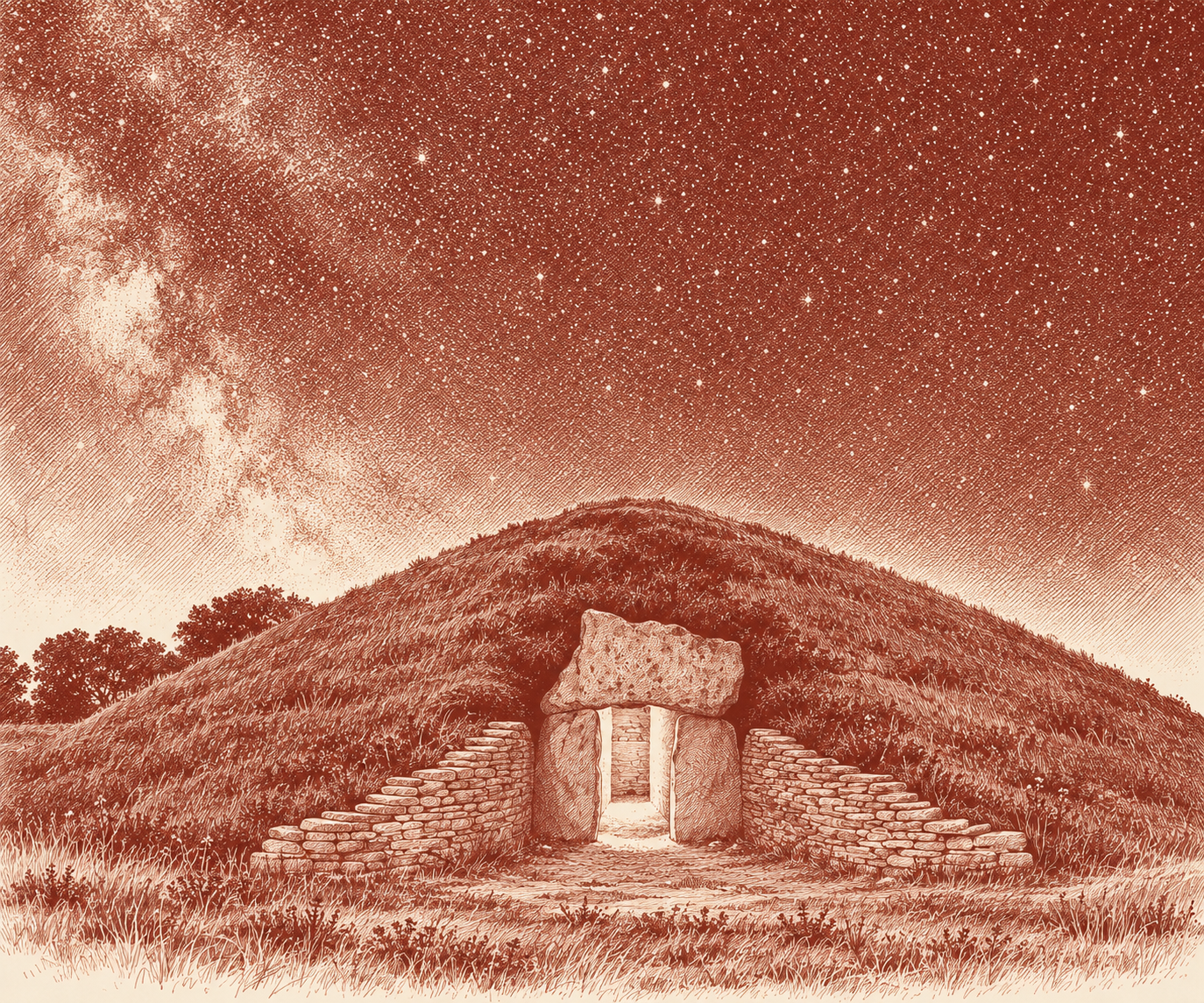
English accounts of an inhabited otherworld beneath the ground give this reading a setting closer to home. William of Newburgh records a Yorkshire story in which a man returning late at night hears revelry from a hillock. An open doorway reveals a spacious, illuminated hall with people feasting inside. An attendant offers him a drink; he carries away the cup and is pursued. William understands the event through Christian ideas of deception, but the narrative he preserves gives the hill an interior occupied by a social company.11
The country beneath the hill is thus recognisable through the activities of a hall. Its inhabitants receive a visitor and offer hospitality; the stolen cup also shows that dealings with them can have consequences. The encounter takes place at a familiar feature of the local countryside. Its hidden depth becomes visible for a time, and an ordinary journey passes close to another community’s dwelling.
The romance of Thomas of Erceldoune, belonging to the northern English and Scottish Border tradition, develops that passage more fully. Thomas enters at Eildon Hill with his otherworldly companion and travels through darkness before reaching a country with a royal court. The route through the hill opens into a larger inhabited world. Its halls and people cannot be measured by the hill’s outward dimensions.12
The Middle English Breton lay Sir Orfeo gives this hidden country a further royal setting. Recasting the story of Orpheus, it follows a king seeking his stolen wife into the domain of another king. Orfeo enters a rock and travels three miles or more before reaching a bright, green country with a splendid castle. Within its walls he finds people who have been taken from the ordinary world, including those described as thought dead, though they were not; his own wife, Heurodis, lies sleeping beneath a tree.
Orfeo gains an audience as a harper, and his music moves the king to promise a reward. When he asks for Heurodis, the king initially refuses; Orfeo appeals to the promise, and the king allows them to depart together. The passage through the earth has brought him into a country where royal authority governs both captivity and release, and where a spoken obligation can determine the outcome of an encounter.13 For our reading, the hidden court gives continued presence a social form: those lost to the visible country remain within another lord’s keeping, and approach to that lord can restore a relationship thought ended.
The name Elfhame belongs most securely in this discussion to Scots lore, where the records include the spelling Elfame. In Bessie Dunlop’s testimony of 1576, her helper Thom Reid is a dead man attached to the Queen of Elfame’s court. Hall discusses the healing knowledge she said she obtained through him. This is a specific instance in which a remembered dead person belongs to the company of the otherworld and mediates assistance to the living.14
Isobel Gowdie’s confessions in 1662 give the hill an explicit opening. She describes entering the Downie hills when the hill opens, finding a large room within, and receiving food from the Queen of Fairy. A king and queen inhabit this setting, and frightening bulls are present at the entrance. These are accounts preserved through witchcraft examinations, with all the pressures and interpretive interventions that such a setting entails; they remain evidence for the forms in which an inhabited country within the hills could be described.15
The fairy-king’s name Oberon supplies a linguistic counterpart to these royal courts. It is usually traced through French Auberon and Auberi to the Germanic name Alberich. The first element means “elf”; the second carries meanings of power and rule, giving the conventional interpretation “elf-ruler.” The corresponding Old English name Ælfrīc contains the same elements.16 This history of the name brings the language of elven being and sovereign authority together, giving a further comparison for Freyr’s possession of Álfheimr.
Together, these stories and names give us a vocabulary of dwelling, encounter, and lordship. The otherworld has its own company and its own authority, while particular places allow relations with those who inhabit the everyday country. We can draw upon this English and Scots inheritance when speaking of Ing’s abiding kingship. Calling the hidden country Elfhame places our theology within that inheritance; identifying its royal character with Ing remains the synthesis proposed here, rather than a name supplied by the storytellers.
The ever king and the welfare of the land
The paired blessings ár ok friðr give this kingship its purpose. Good seasons provide the material conditions in which the country can live, while frith concerns the security and ordered relationships within which that life can continue. In our theological use, the two belong together. Prosperity becomes a shared good when households can remain established, obligations can be met, and the work of one season can sustain the next. The king’s presence concerns this continuing life of the country.
The mound gives that presence a settled dwelling. Procession, as we argued in Wægn ran æfter, brings the acknowledged relationship through the inhabited land; approach to the mound turns toward the place where the king abides. The two movements can belong to the same religious life. A people may receive its lord as he is borne among them and seek him where his presence is kept. This relation between journey and dwelling is our theological development of the sources, rather than a complete ritual sequence preserved in any one account.
To call Ing the ever-king is therefore to affirm an enduring bond with a community and its land. His presence is particular enough to be approached, and the acts of approach matter. Gifts acknowledge what has been received and carry the expectation that the relationship will continue. Keeping the king in the land also places an obligation upon the people who seek his favour: the frith they ask him to sustain must find expression in their own dealings with one another.
The mound belongs to the visible country, enduring among its fields and paths. The stories of an opened entrance suggest an inhabited depth that those who approach it cannot ordinarily see. That conjunction expresses the conviction drawing these traditions together: concealment can preserve presence, and the earth that covers a dwelling need not end the possibility of encounter.
For us, the god in the mound is Ing understood through the abiding kingship of Yngvi-Freyr. His association with Fróði places the peace of the country within that kingship, and his possession of Álfheimr gives its hidden dwelling an otherworldly horizon. The people come to the mound because they understand themselves to remain in relation with its lord. Their offerings address the ever-king in the land, seeking from that continuing bond the good seasons and frith by which the country lives.
Sources
Beckmann, Gustav Adolf. “Les deux Alpais et les toponymes épiques (Avroy-)Auridon-Oridon-Dordon(e).” In Gesammelte Aufsätze zur altfranzösischen Epik, 293–304. Berlin/Boston: De Gruyter, 2019. doi:10.1515/9783110615692-011.
Bellows, Henry Adams, trans. The Poetic Edda. New York: American-Scandinavian Foundation, 1923. Grímnismál, stanza 5.
Collingwood, W. G., and Jón Stefánsson, trans. Kormáks saga. 1901. English text, Icelandic Saga Database, chapter 22.
Dictionary of the Older Scottish Tongue. “Elfame.” Dictionaries of the Scots Language.
Goodrich, Jean N. “Fairy, Elves and the Enchanted Otherworld.” Undated PDF. Pages 16–17.
Hall, Alaric. “The Meanings of Elf and Elves in Medieval England.” PhD thesis, University of Glasgow, 2004. Chapter 2.
Hall, Alaric. “Getting Shot of Elves: Healing, Witchcraft and Fairies in the Scottish Witchcraft Trials.” Folklore 116 (2005): 19–36. Author’s preprint.
Johnston, George, trans. The Saga of Gisli. In Three Icelandic Outlaw Sagas. London: Viking Society for Northern Research, 2004; corrected reprint, 2014.
Pitcairn, Robert, ed. Criminal Trials in Scotland. Vol. III. Edinburgh: William Tait, 1833. “Confessions of Issobell Gowdie,” pp. 602–616.
Saxo Grammaticus. The First Nine Books of the Danish History of Saxo Grammaticus. Translated by Oliver Elton. London: David Nutt, 1894. Book V.
Sidgwick, Frank, ed. The Sources and Analogues of “A Midsummer-Night’s Dream.” 1908. “The Romance of Thomas of Erceldoune,” first fytte.
Sir Orfeo. Auchinleck manuscript, National Library of Scotland, Advocates MS 19.2.1. Digital transcription, especially fols. 301vb–302rb.
Smith, Brian. What the Names Keep. Author’s manuscript. Chapter “Ing.”
Smith, Brian. Wægn ran æfter: Ing and the Continuance of Kingship. Revised manuscript.
Snorri Sturluson. Heimskringla. Vol. 1. Translated by Alison Finlay and Anthony Faulkes. 2nd ed. London: Viking Society for Northern Research, 2016. Ynglinga saga, chapter 10; Hálfdanar saga svarta, chapter 9.
Uckelman, S. L. “Alberich.” In The Dictionary of Medieval Names from European Sources, edited by S. L. Uckelman. Edition 2023, no. 1.
William of Newburgh. Historia rerum Anglicarum. Translated by Joseph Stevenson. In The Church Historians of England, vol. IV, part II. London: Seeleys, 1856. Book I, chapter 28. Internet Medieval Sourcebook text.
Footnotes
Brian Smith, What the Names Keep, chapter “Ing,” especially “The King Who Remains,” author’s manuscript; and Wægn ran æfter: Ing and the Continuance of Kingship, revised manuscript.
Return to textSnorri Sturluson, Ynglinga saga, chapter 10, in Heimskringla, vol. 1, trans. Alison Finlay and Anthony Faulkes, 2nd ed. (London: Viking Society for Northern Research, 2016), pp. 13–14. Ár ok friðr gives the nominative forms; the expression after til is til árs ok friðar.
Return to textSnorri, Ynglinga saga, chapter 10, p. 14.
Return to textSaxo Grammaticus, Gesta Danorum, end of book V, in The First Nine Books of the Danish History of Saxo Grammaticus, trans. Oliver Elton (London: David Nutt, 1894). Elton uses the name Frode.
Return to textSnorri Sturluson, Hálfdanar saga svarta, chapter 9, in Heimskringla, vol. 1, trans. Finlay and Faulkes, p. 53. Their note 114 records differences in other accounts of Hálfdan’s burial.
Return to textGísla saga Súrssonar, chapter 18, in The Saga of Gisli, trans. George Johnston, in Three Icelandic Outlaw Sagas (London: Viking Society for Northern Research, 2004; corrected reprint, 2014), pp. 30–31.
Return to textKormáks saga, chapter 22, trans. W. G. Collingwood and Jón Stefánsson (1901), Icelandic Saga Database. The hillock is an elvish dwelling; the passage does not expressly call it a grave.
Return to textGrímnismál, stanza 5, in The Poetic Edda, trans. Henry Adams Bellows (New York: American-Scandinavian Foundation, 1923). Compare the Old Norse text and discussion in Alaric Hall, “The Meanings of Elf and Elves in Medieval England” (PhD thesis, University of Glasgow, 2004), p. 44.
Return to textHall, “The Meanings of Elf and Elves,” pp. 31–34, 41, 43–45.
Return to textHall, “The Meanings of Elf and Elves,” pp. 34–35.
Return to textWilliam of Newburgh, Historia rerum Anglicarum, book I, chapter 28, sections 3–4, trans. Joseph Stevenson, in The Church Historians of England, vol. IV, part II (London: Seeleys, 1856), as reproduced by the Internet Medieval Sourcebook.
Return to textThe Romance of Thomas of Erceldoune, first fytte, in Frank Sidgwick, ed., The Sources and Analogues of “A Midsummer-Night’s Dream” (1908), the passage beginning with the entrance at Eildon Hill. This is the romance, rather than the later ballad.
Return to textSir Orfeo, Auchinleck manuscript, National Library of Scotland, Advocates MS 19.2.1, fols. 301vb–302rb, digital transcription: the entrance into the rock, the people within the castle, and Orfeo’s petition for Heurodis. The poem says that people were thought dead but were not; it does not simply identify the whole company as the dead. For the literary setting, see Jean N. Goodrich, “Fairy, Elves and the Enchanted Otherworld,” supplied PDF, pp. 16–17.
Return to textDictionary of the Older Scottish Tongue, s.v. “Elfame,” citing Bessie Dunlop’s 1576 testimony; Alaric Hall, “Getting Shot of Elves: Healing, Witchcraft and Fairies in the Scottish Witchcraft Trials,” Folklore 116 (2005), pp. 19–36, especially pp. 25–26.
Return to text“Confessions of Issobell Gowdie,” 1662, in Robert Pitcairn, ed., Criminal Trials in Scotland, vol. III (Edinburgh: William Tait, 1833), pp. 604 and 611. Compare Hall, “Getting Shot of Elves,” p. 31, on suggestion, coercion, and the recording of Gowdie’s fairy accounts.
Return to textGustav Adolf Beckmann, “Les deux Alpais et les toponymes épiques (Avroy-)Auridon-Oridon-Dordon(e),” in Gesammelte Aufsätze zur altfranzösischen Epik (Berlin/Boston: De Gruyter, 2019), pp. 293–304, doi:10.1515/9783110615692-011, on Auberon as a hypocoristic of Auberi, corresponding to Alberîch; S. L. Uckelman, “Alberich,” The Dictionary of Medieval Names from European Sources, ed. S. L. Uckelman, 2023, no. 1, for the Germanic elements and the English forms. “Elf-ruler” is an interpretive gloss of the compound; the name’s etymology does not establish the identity of its legendary bearer with Ing.
Return to text