Crafts · Nýdfýr
The Nýdfýr Chant
Bringing Forth the Holy Fire
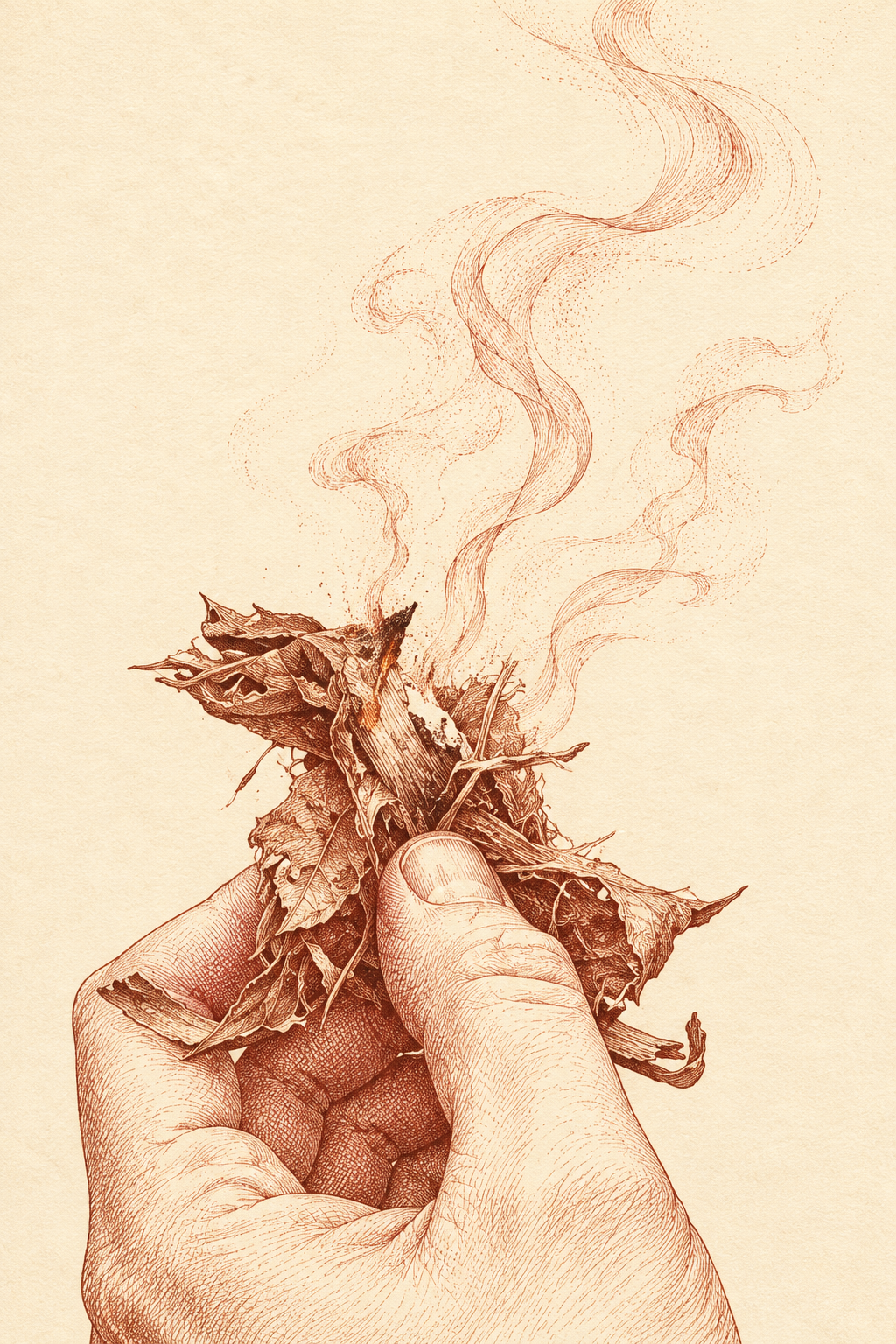
Nýdfýr begins in the labour of the hands. Wood is worked against wood until an ember holds its own heat; tinder receives it, breath raises it to flame, and the newly kindled fire is seated in the wíh. The chant accompanies this making, giving words to the sacred work performed through the craft.
At Hwítmersc, the invocation is repeated while the ember is brought forth; the closing words are reserved for the placing of the fire. These two moments give the chant its order: wéoh comes into the world through the kindling, and the wíh is established where that fire is received.
The words and their occasions
The working form
During the kindling · Repeat until the ember is brought forth
Wéoh, wéoh, weorð on worulde.
Wéoh, wéoh, come into being in the world.
Upon placing the tinder nest in the wíh · Speak once
Hér weorðe wíh.
Here let the wíh come into being.
The repetition belongs to the effort of kindling; its duration is governed by the work. The closing line belongs to the placement of the fire. Let it stand alone, followed by a pause.
Speech joined to the deed
Order of working
Prepare the fire’s receiving place
Have the hand bow, spindle, hearthboard, tinder nest, and fuel ready. Prepare the hearth within the bounds of the wíh so that it can receive the burning nest. The Nýdfýr guide gives the method and the care required in handling the fire.
Take up the invocation
The opening three stanzas of the full chant may accompany the beginning of the work. While working the bow to bring forth the ember, repeat “Wéoh, wéoh, weorð on worulde.” Keep a steady, unhurried cadence that leaves room for breath; continue the invocation as the labour continues, reserving the final line.
Receive the ember in tinder
When a lasting ember has formed, bring the repeated invocation to a close. Allow the coal to strengthen, transfer it carefully into the nest, and tend it with breath until the tinder takes flame. Give this passage the attention it requires; the closing words still await the fire’s placement.
Seat the fire in the wíh
Place the burning nest in the prepared hearth. With the nest in place, say “Hér weorðe wíh” once. Pause, then continue tending the flame and feeding it with the prepared kindling. This fire becomes the living source from which the torch is later lit for Wéohende.
Old English and translation
The full chant
The longer song follows the making from smoke and sweat to the heavenly fire and its seat. In the working form above, its final couplet is divided between the labour of kindling and the placement of the fire.
Spearca, spearca, smíc ond swát;
of weorce weorðe gléd.
Spark, spark, smoke and sweat;
from labour let an ember arise.
Byrn, byrn, beorhte glów;
of gléde weorðe líeg.
Burn, burn, brightly glow;
from ember let flame arise.
Fýr, fýr, heofonfýr;
on foldan árís.
Fire, fire, heaven-fire;
upon the earth arise.
Wéoh, wéoh, weorð on worulde;
hér weorðe wíh.
Wéoh, wéoh, come into being in the world;
here let the wíh come into being.
The fire and its seat
Heaven-fire upon the earth
Heofonfýr, “heaven-fire,” is an Old English word for lightning.1 In this chant we name the flame brought forth by friction with the fire of the heavens; through the heargweard’s labour, that power is given a beginning here in the world. Smoke and sweat belong together in the opening words, joining the first sign of fire to the effort that produces it.
Weorð calls upon wéoh to come into being; weorðe gives the closing words the force of “let it come into being.”2 The word hér, “here,” joins the utterance to the prepared hearth. The ground has been measured and bounded; through the placement of the newly made fire, its sacred centre is established.
The fire is then kept and strengthened for the work that follows. In Wéohende, flame from this source is borne into the hearg; the fire at the centre continues to burn as its sacred power is extended through the enclosure.
Notes on the words
This form of the chant belongs to the present practice of Hwítmersc; wéoh and wíh carry their meanings within Fyrnsegen’s theology.
- Bosworth–Toller, heofon-fýr, “lightning.” See also swát, for sweat and the labour that produces it. ↩
- Bosworth–Toller, weorþan, including the senses “come to be” and “arise.” The chant uses the singular imperative weorð and the singular present subjunctive weorðe. ↩